Dental Crowns and Tooth Sensitivity: Is It Normal?
Getting a crown often solves one problem and briefly introduces another. A damaged or heavily filled tooth is protected, chewing feels more stable, and the tooth looks better. Then a patient takes a sip of iced water or bites into toast and feels a sharp zing. The immediate question is predictable: was the crown supposed to fix the tooth, and if so, why does it suddenly feel sensitive?
The short answer is yes, some sensitivity after a crown is normal. The more useful answer is that not all sensitivity means the same thing. A little temperature awareness for a few days is very different from lingering pain that keeps you awake, or discomfort every time you bite down. The details matter, and they often point toward whether the tooth is simply healing or whether something needs to be adjusted.
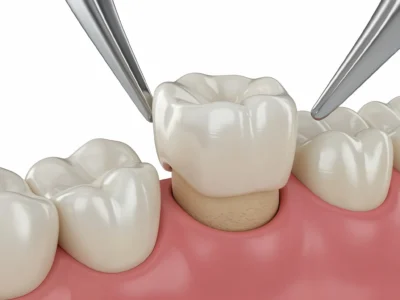
Dental Crowns are common, dependable restorations, but they are not passive little caps that sit on a tooth without affecting it. Preparing a tooth for a crown involves shaping enamel and sometimes dentin, taking impressions or digital scans, fitting a temporary, and later bonding or cementing the final restoration. Every one of those steps can irritate the tooth to some degree. Most of the time that irritation settles. Sometimes it does not.
Why a crowned tooth can feel sensitive in the first place
A natural tooth is a living structure. Under the hard outer enamel and the softer dentin sits the pulp, which contains the nerve and blood supply. Even if a crown covers the visible portion of the tooth beautifully, the tissue inside the tooth still responds to heat, cold, pressure, and inflammation.
When a dentist prepares a tooth for a crown, a small amount of structure has to be removed to make room for the material. If the tooth already had a large filling, a crack, decay, or previous trauma, that nerve may have been irritated before treatment even began. The crown procedure can add one more stressor to a tooth that was already on edge.
Temporary crowns are another common reason for short-term sensitivity. They are useful and often necessary, but temporary materials do not seal quite like the final restoration. If the margin is a little less snug or the temporary cement washes out in a spot, cold air or liquids can reach exposed dentin and cause a quick, sharp response.
The bite also plays a bigger role than many people realize. A crown that is even slightly high can make one tooth absorb more force than it should. Patients often describe this as sensitivity, but it can feel like soreness, pressure, or a bruised sensation when chewing. Sometimes the crown itself is fine, but the opposing tooth is striking it too early during closure. A simple bite adjustment can change everything.
There is also the issue of gum tissue. Crowns sit near the gumline, and that area may be mildly inflamed after impressions, retraction cord, cement cleanup, or just the process of keeping the mouth open during treatment. Gum inflammation can make the area feel tender and can expose root surfaces, which are naturally more sensitive than enamel.
What “normal” sensitivity usually feels like
Normal post-crown sensitivity tends to be mild to moderate, intermittent, and clearly improving. It often shows up with cold drinks, cold air, or pressure during the first few days. Some people notice a bit of gum tenderness when brushing or flossing around the crown. That alone is not unusual.
A typical pattern looks something like this: the tooth feels strange or mildly sore the first day, more noticeable with temperature than at rest. By the end of the first week, the episodes are less frequent. Over two to four weeks, the tooth settles into the background and behaves much more like the neighboring teeth.
That timeline is not identical for everyone. A tooth with a small old filling may calm quickly. A tooth that had deep decay, a very large filling, or a history of clenching may take longer. Molars, especially those that do most of the chewing, can stay aware of pressure longer than front teeth. The crown material can affect the feel too, although the underlying tooth condition usually matters more than whether the crown is porcelain, zirconia, or metal-based.
One practical point that surprises many patients is that a crowned tooth can feel “different” long after it stops being truly sensitive. The tongue notices the contours, chewing feels slightly unfamiliar, and there may be a vague awareness of the area. That is adaptation, not necessarily a problem.
When the pattern starts to look less normal
Dentists pay close attention not just to whether a tooth hurts, but how it hurts. Pain has a pattern, and that pattern helps narrow down the cause.
A quick, momentary response to cold that disappears within seconds is often less concerning than pain that lingers for a minute or more. Tenderness when biting can mean the bite is too high, but it can also suggest a crack, inflammation around the ligament, or a problem under the crown. Throbbing pain that starts on its own, especially at night, raises a different level of concern because it can point to inflammation inside the pulp that is not settling down.
If a patient says, “Cold bothers it for a second, then it’s fine,” that usually leads the dentist down one path. If the patient says, “I can’t tell which tooth it is, but every few hours it starts aching and pain medicine barely touches it,” that leads down another.
This is where context matters. A tooth crowned after a fracture may have hidden crack lines extending deeper than expected. A tooth crowned after a deep cavity may have had a nerve that was close to the edge already. The crown did not create the original damage, but it may reveal the true condition of a tooth that was borderline from the start.
Bite problems are more common than people think
One of the most fixable reasons for sensitivity after a crown is an uneven bite. It does not take a dramatic mismatch to cause symptoms. Teeth meet with remarkable precision. A restoration that is just a little proud of the surrounding bite can make that tooth absorb repeated force all day long, and much more at night if the patient clenches or grinds.
The symptoms are often distinctive. The tooth feels “tall.” Chewing on that side feels awkward. The discomfort may be strongest when releasing the bite rather than when closing. Some patients describe the tooth as tender to tapping or sore in a way that feels deeper than a simple cold sensitivity.
This kind of issue is especially common when the mouth is numb during placement. Patients may think their bite feels fine in the chair, then realize later that it does not once the anesthesia wears off. Fortunately, this is often one of the simplest fixes. A careful adjustment of the crown’s biting surface can relieve the ligament around the tooth and allow it to calm down.
Temperature sensitivity versus pressure sensitivity
It helps to separate these two because they often point to different causes.
Temperature sensitivity, especially to cold, is frequently linked to exposed dentin, mild pulpal irritation, receding gums, or a seal that is not perfect yet. It tends to be quick and stimulus-based. You drink something cold, feel the zing, then it fades.
Pressure sensitivity has more possibilities. It can come from a high bite, an inflamed ligament, a crack, or irritation at the root level. If pressure pain is sharp and localized, especially on release after biting, a crack is often part of the conversation. If it feels more like a bruise or soreness with chewing, the bite may be involved.
Heat sensitivity is less common and gets more attention from dentists. A tooth that reacts strongly to hot drinks, particularly if the pain lingers, may have more significant pulpal inflammation. That does not automatically mean root canal treatment is needed, but it moves the case out of the “probably normal healing” category.
The role of the temporary crown
Temporary crowns deserve more credit and more blame than they usually get. They protect the prepared tooth between visits, preserve space, and help maintain appearance and function. But they are still temporary. They can leak slightly, feel rough, loosen, or create minor gum irritation.
A patient with a temporary crown may notice more sensitivity than they expect, especially with cold air, sweets, or brushing. That can improve dramatically once the final crown is bonded. The final crown usually fits more precisely and seals the prepared tooth more effectively.
On the other hand, if sensitivity begins only after the final crown is placed, the dentist may consider a different set of possibilities, such as bite issues, cement irritation, bonding sensitivity, or a nerve that simply did not tolerate the procedure well.
Materials matter, but not as much as the tooth underneath
Patients often ask whether one crown material is “less sensitive” than another. The honest answer is that fit, bite, and the health of the Dental Crowns underlying tooth usually matter more than the brand or material category.
Porcelain and zirconia crowns are common and durable. Metal-based crowns still perform well in many situations. Some materials conduct temperature differently, and some tooth preparations are more conservative than others, but the bigger clinical factors are depth of the original damage, how close the preparation came to the pulp, and whether the final crown fits and functions properly.
A healthy tooth with a well-made crown can feel unremarkable in a very short time. A heavily restored tooth with a history of pain may remain unpredictable no matter how elegant the crown is.
How long should sensitivity last?
There is no single deadline, but there are practical expectations. Mild sensitivity that gradually fades over a few days to a few weeks is common. A month is not unheard of, particularly in teeth that were already compromised. What matters most is the trend.
If the tooth is steadily getting better, that is reassuring. If it plateaus at an annoying but manageable level, the dentist may Dental Crowns still want to check the bite and margins. If it worsens after an initial calm period, that deserves a closer look.
A good rule of thumb is that a crowned tooth should not be becoming more reactive as time passes, unless something changed, such as clenching, a new crack, a loose crown, or gum recession exposing the root. Worsening symptoms are worth evaluating even if the crown was placed weeks earlier.
Signs that deserve a call back to the dental office
- Pain that wakes you up, throbs, or starts without any trigger
- Cold or heat sensitivity that lingers well after the drink is gone
- Sharp pain when biting, especially if it is getting worse
- A feeling that the crown is too high or the bite is off
- Swelling, bad taste, fever, or a loose crown
None of these automatically mean the crown failed. They simply move the situation from “watch and wait” to “please check this.”
What the dentist may look for at a follow-up visit
A review visit for post-crown sensitivity is usually straightforward. The dentist will ask when the pain started, what triggers it, how long it lasts, and whether chewing or temperature makes it worse. Those questions are not routine small talk. They shape the diagnosis.
The exam often includes checking the bite with articulating paper, tapping the tooth, testing temperature response, and examining the gumline around the crown. X-rays may help, though very early nerve inflammation does not always show on an image. If there is suspicion of a crack or a deep pulpal issue, the dentist may compare the crowned tooth with neighboring teeth to see whether the responses are normal or exaggerated.
Sometimes the fix is as simple as adjusting the bite and asking the patient to monitor it for a week. Sometimes desensitizing toothpaste and time are enough. In other cases, the crown may need to be evaluated for fit, or the tooth may need root canal treatment if the pulp is irreversibly inflamed.
That last point can be frustrating for patients. If they just paid for a crown, hearing that a root canal may still be necessary feels like a bait and switch. Clinically, though, it is not unusual. A crown protects and restores the outside of the tooth. It does not guarantee the nerve inside will recover, particularly if the tooth was deeply compromised before treatment.
What you can do at home while the tooth settles
A little common sense goes a long way here. Avoid testing the tooth every ten minutes with ice water, which patients definitely do. If cold is triggering symptoms, choose room-temperature drinks for a few days. Chew on the other side if biting feels tender. Keep the area clean, but brush gently near the gumline.
Desensitizing toothpaste can help, especially if root exposure or dentin sensitivity is part of the picture. The effect is usually not instant. It often takes several days or a couple of weeks of consistent use. If the dentist recommended an anti-inflammatory medication and you can safely take it, that may reduce ligament soreness from bite trauma or procedural irritation.
The home approach should be simple:
- Use a soft brush and floss carefully around the crown
- Choose lukewarm foods and drinks if temperature is a trigger
- Try a desensitizing toothpaste for at least one to two weeks
- Avoid chewing hard foods on that side until the tooth calms down
- Contact the office if symptoms intensify instead of easing
That is supportive care, not a substitute for evaluation when red flags appear.
A few situations that deserve extra nuance
Teeth that had root canal treatment before the crown usually should not have classic hot or cold nerve sensitivity, because the nerve tissue has been removed. If a root canal tooth under a crown hurts, the source may be the bite, the surrounding ligament, the gums, a root fracture, or a problem with the root canal itself. Patients sometimes assume any discomfort must be “nerve pain,” but with those teeth the story is often different.
Lower molars and upper molars can also be trickier than front teeth because they absorb heavy chewing forces. A slight high spot in a molar crown can create outsized symptoms. People who grind their teeth at night may feel crown sensitivity longer, not because the crown is poor, but because they are loading that tooth for hours while asleep.
Gum recession adds another layer. Sometimes the crown is fine, but the root surface of the natural tooth just below the edge of the crown becomes exposed. Patients often point to the crown and say it hurts, when the tender spot is actually on the root near the gumline. That kind of sensitivity is common with cold and brushing.
There is also the question of sinus pressure for upper back teeth. The roots of upper molars sit close to the sinus floor in many people. Congestion can make those teeth feel sore or pressure-sensitive, and the timing may mislead a patient into blaming a newly placed crown. It is not the first explanation, but it does come up often enough to keep in mind.
The bigger picture with Dental Crowns
Dental Crowns are strong, versatile restorations, but they are not magic covers that erase every problem a tooth has ever had. Sometimes they restore a tooth so successfully that the area feels better almost immediately. Sometimes they uncover the fact that the tooth’s nerve was already struggling. Both outcomes are part of real-life dentistry.
The best way to think about post-crown sensitivity is as a signal that needs interpretation, not panic. Mild, fading sensitivity is common. Persistent, worsening, spontaneous, or bite-related pain deserves attention. The difference between those categories is where experience matters most, both for patients noticing the details and for dentists sorting out the cause.
If the tooth feels a little sensitive after treatment, that does not mean something went wrong. It means a living tooth went through a significant procedure. Most settle with time, a bite adjustment, or small supportive measures. The few that do not usually tell on themselves through their pattern. When they do, a prompt follow-up is the smartest move.
Simple Dental Vermont
Address: 8914 S Vermont Ave, Los Angeles, CA 90044
Phone number: +13239493000
FAQ About Dental Crowns
How much do crowns cost per tooth?
In the United States, a single dental crown typically costs between $800 and $2,500 per tooth without insurance. The ultimate out-of-pocket price depends heavily on the crown material, the location of the tooth, and whether you have dental insurance coverage.
What is the downside of crowns on teeth?
The primary downside of a dental crown is that the procedure permanently removes natural tooth enamel to shape the tooth for the cap.
Why do dentists push for crowns?
Dentists recommend crowns because a large filling cannot provide enough strength when a tooth loses a major portion of its structure or faces heavy chewing pressure.