Dental Crowns Los Angeles CA: Options for Every Dental Need
A dental crown is one of those restorations people rarely think about until a tooth starts to crack, a filling fails, or a root canal leaves a back molar too fragile to trust. Then it becomes very real, very quickly. In practice, crowns solve a wide range of problems. They restore strength, improve function, protect compromised teeth, and often make a smile look dramatically better without changing its character.
For patients searching for Dental Crowns Los Angeles CA, the challenge is not just finding a provider. It is understanding which type of crown fits the tooth, the bite, the cosmetic goal, and the budget. Los Angeles patients often arrive with strong preferences, some based on aesthetics, some on convenience, and some on stories they have heard from friends. The right answer is rarely one size fits all. A front tooth and a grinding molar do not ask for the same material. A patient with excellent enamel and a small fracture needs a different approach from someone replacing an older crown with decay underneath.
Crowns seem simple from the outside. A cap goes over the tooth, the tooth looks normal again, and the problem is solved. The real work happens in the details. How much healthy tooth structure can be preserved? Is the gum line even? Has the bite been managed correctly? Is the material strong enough for the forces it will endure day after day? Those details are what determine whether a crown feels natural for years or turns into a recurring frustration.
Dental Crowns Los Angeles CAWhat a crown actually does
A crown covers and protects a tooth that can no longer function safely with a filling alone. That may be because a cavity has become too large, a fracture has weakened the cusps, an older restoration has broken down, or a root canal has removed internal support. In cosmetic cases, a crown can also reshape a tooth that is badly worn, discolored, or structurally compromised.
The key distinction is this: a crown is not just cosmetic, even when it looks beautiful. It is a structural restoration. It redistributes biting forces and protects what remains of the tooth. When indicated properly, it can prevent a cracked tooth from turning into an extraction case. When used too aggressively or on the wrong tooth, it can remove more enamel than necessary. Good treatment planning matters.
In Los Angeles, I often see patients who delayed treatment because the tooth “wasn’t hurting that much.” Pain is an unreliable guide. A cracked molar may only twinge on popcorn or cold water for months before it splits enough to involve the nerve. By the time the pain is severe, the treatment is often more extensive and more expensive.
When a crown makes sense, and when it may not
A crown is often recommended after a root canal, for a tooth with a large failing filling, for a broken tooth, or for severe wear from grinding and clenching. It can also be the best option when a tooth has had multiple repairs and no longer has enough sound enamel to hold another filling predictably.
That said, not every damaged tooth needs a full crown. If the problem is smaller and the remaining enamel is strong, an onlay or bonded restoration may preserve more natural tooth structure. Conservative care is usually better when it is genuinely durable. The trick is honesty about the limits. A tiny patch on a severely compromised molar may feel conservative in the moment, but if it fails repeatedly, the patient loses time, money, and often more tooth structure in the end.
This is where experience matters. The question is not whether a dentist can place a crown. Most can. The real question is whether the crown is the right restoration for that specific tooth.
The main crown materials and how they differ
Patients usually hear a short list of material names and are expected to make a decision quickly. It helps to translate those names into practical terms.
Porcelain or ceramic crowns are popular for visible teeth because they mimic natural enamel very well. They can reflect light beautifully when designed with care, which matters on front teeth. Modern ceramics can also be quite strong, though strength varies by type. For many patients, especially those concerned about appearance, all ceramic options are the easiest to accept.
Zirconia crowns have become common because they are durable and versatile. They work especially well on molars and patients with heavy bite forces. Early zirconia had a reputation for looking more opaque, but current versions can be much more refined. Even so, not every zirconia crown looks ideal in the front of the mouth. Material selection should match the cosmetic demand.
Porcelain fused to metal crowns were once the standard for many cases. They still have valid uses, particularly where strength is needed and the cosmetic zone is less demanding. Their drawback is familiar. Over time, some show a dark line near the gums, especially if the gum tissue recedes. For patients who smile broadly or have thin gum tissue, that can be disappointing.
Gold and other high noble metal crowns remain excellent restorations from a purely functional standpoint. They wear well, are kind to opposing teeth, and can last a very long time. They are less common today mainly because most patients prefer a tooth colored restoration. On far back molars, however, metal can still be one of the smartest options for longevity if the patient is open to it.
Resin based or temporary style materials are usually not the first choice for long term definitive crowns, though they may be used in transitional situations. In a complex rehab, a dentist may use provisional crowns for a period to test bite changes, speech, and aesthetics before finalizing the case.
Why front teeth and back teeth call for different decisions
It is easy to assume that the “best” crown material should be used everywhere. Dentistry does not work that way. The front teeth are judged by color, translucency, shape, and how naturally they blend with neighboring teeth. A crown on a central incisor that is even slightly too opaque or too square can draw the eye immediately, even if the fit is excellent.
Molars live a different life. They absorb heavy force, especially in patients who grind at night or clench under stress. Los Angeles is full of high stress professionals, performers, entrepreneurs, and commuters spending too much time in traffic. That tension often shows up in the bite. Worn edges, fractured cusps, and jaw soreness are common companions to crown work. In those cases, strength and occlusal design matter at least as much as aesthetics.
A carefully chosen ceramic may be perfect for a lateral incisor. A monolithic zirconia crown may be better for a lower first molar in a strong grinder. Neither choice is universally right. Each is right in context.
The process, from first visit to final cementation
A crown appointment usually begins with examination, radiographs when needed, and a careful discussion of the tooth’s prognosis. If decay extends below the gum line, if a crack runs too deep, or if the tooth lacks enough structure to retain a crown predictably, those concerns need to be addressed before the restoration phase.
If the tooth is restorable, the dentist reshapes it to create room for the crown material. The amount removed depends on the material and the condition of the tooth. That is one reason material choice is not just cosmetic. Different materials require different thicknesses to perform well.
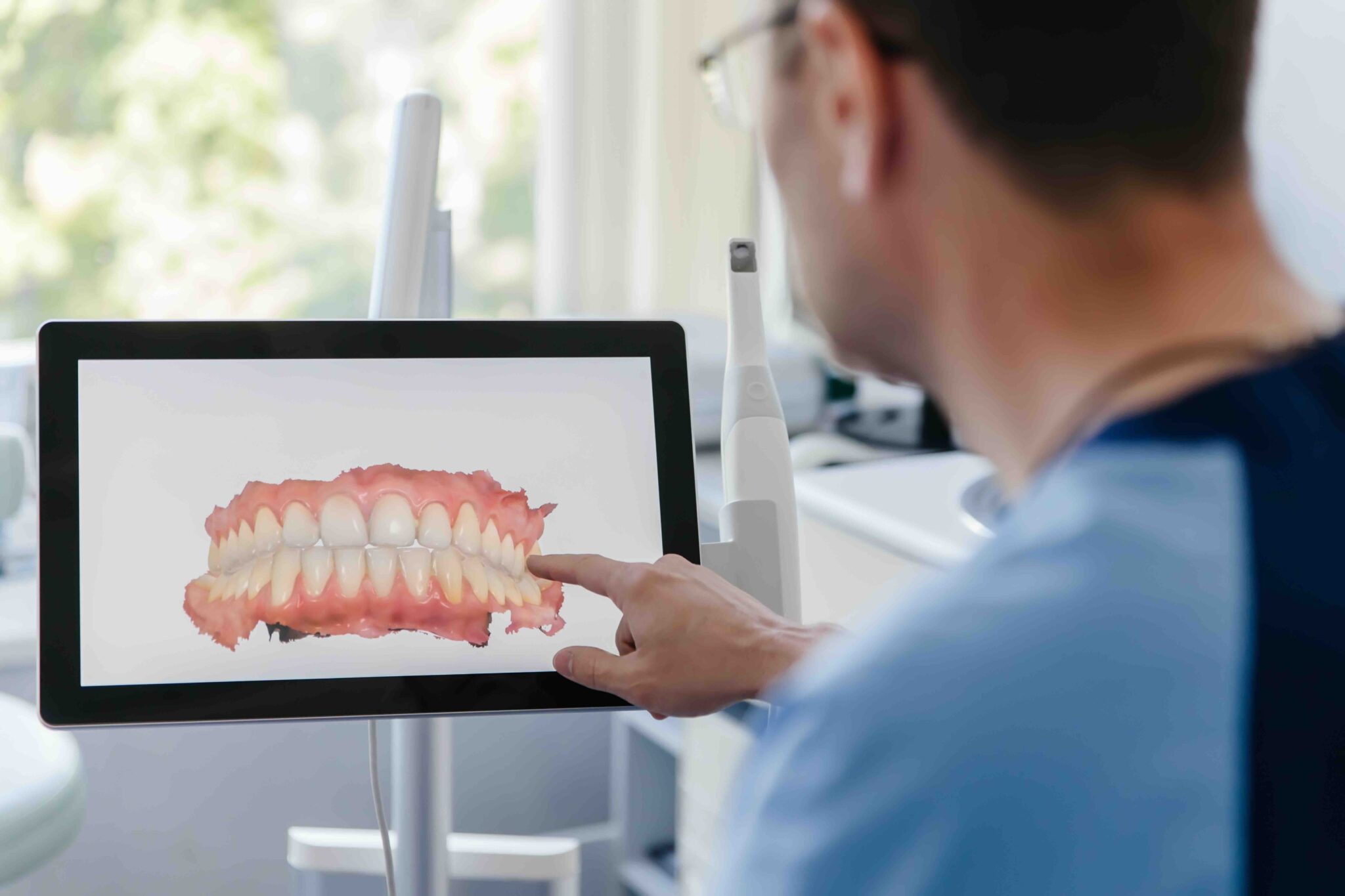
After preparation, an impression or digital scan is taken. Good scans have improved crown accuracy significantly, but technology does not replace judgment. A clean margin, dry field, and well managed tissue are still essential. If the prep line is sloppy or bleeding obscures the scan, the final crown may not fit the way it should.
Most patients leave with a temporary crown while the laboratory fabricates the final one. Temporary crowns do more than fill space. They protect the tooth, maintain position, and give both patient and dentist a preview of shape and comfort. If the temporary feels too bulky, catches floss strangely, or changes speech, that feedback is valuable before the final crown is delivered.
At the delivery appointment, fit, contact points, shade, and bite are checked. This part should not be rushed. A crown that is microscopically too high can make a patient feel as if “something is off” every time they chew. Minor bite issues can also trigger sensitivity or jaw strain. Once adjusted properly and cemented, the crown should feel secure and natural within a short period.
Same day crowns, convenient but not always ideal
Same day crowns appeal to busy patients, and Los Angeles has no shortage of people trying to fit dentistry between meetings, auditions, school pickups, and production schedules. The convenience is real. Digital scanning, in office milling, and same visit placement can reduce time away from work and eliminate the temporary phase.
Still, same day is not automatically best day. Certain cases benefit from a skilled lab technician who can refine contour, color layering, and texture with more nuance than a single visit workflow allows. This is especially true for highly visible front teeth or complex cosmetic matching. Same day systems can produce excellent results in the right case, particularly posterior crowns, but the indication matters.
Patients usually do best when they ask not just “Can this be done today?” but “What do I gain, and what might I give up, by doing it in one visit?”
Cost in Los Angeles, and why prices vary so much
Fees for crowns in Los Angeles can vary widely. Geography plays a role, but it is not the whole story. The fee reflects the material, the complexity of the tooth, whether a buildup or root canal is needed, the quality of the lab work, the technology used, and the time spent on design and bite refinement.
A straightforward molar crown on a stable tooth is different from replacing an old front crown with gum asymmetry, shade matching challenges, and a history of trauma. One case may be routine. The other may require the dentist to think like a restorative clinician, cosmetic planner, and biomechanical engineer all at once.
Patients should also understand what is included. Some offices quote a low fee that does not account for buildup, temporary work, or necessary imaging. Others include more comprehensive planning and a higher quality lab. The cheapest crown is often not the least expensive over time if it fails early, traps food, or needs frequent adjustment.
Questions worth asking before you agree to treatment
Choosing a crown provider is easier when patients know what to ask. A brief conversation can reveal a great deal about how thoughtfully the case is being handled.
- What material do you recommend for this specific tooth, and why?
- Is the tooth cracked, root canal treated, or heavily filled, and how does that affect the prognosis?
- Will this be made by a lab or in office, and what are the trade-offs?
- What should I expect in terms of longevity, maintenance, and possible future issues?
- If I grind or clench, do I need a night guard to protect the crown?
Those questions are practical, not confrontational. A good dentist should be comfortable answering them clearly.
How long crowns last in real life
Patients often want a single number. Ten years. Fifteen years. Twenty years. Real life is less neat. Crowns can last a long time, but their lifespan depends on several factors, including the amount of remaining tooth structure, bite forces, oral hygiene, diet, and how precisely the restoration fits.
I have seen crowns fail early because the patient cracked them on ice, ignored a rough bite, or had heavy untreated bruxism. I have also seen older crowns still functioning well after many years because the margins were excellent and the patient maintained them carefully. Often the crown itself is not the weak point. The tooth underneath is. Decay at the margin, recurrent leakage, fracture of the root, or gum disease are common reasons a crowned tooth runs into trouble.
That is why follow up matters. A crown is not a lifetime exemption from dental care. It still needs professional evaluation, floss access, healthy gum support, and a stable bite.
The overlooked issue, the bite
If there is one factor patients underestimate, it is occlusion, how the teeth meet and slide against one another. A technically beautiful crown can become a problem if it lands in the wrong bite pattern. Patients describe this in familiar terms. The tooth feels too tall. Chewing feels awkward. Cold sensitivity lingers. The jaw gets sore on one side.
In a city where stress related grinding is common, bite adjustments are not cosmetic tweaks. They are part of the function of the restoration. If a patient already has flattened teeth, fractured fillings, or tenderness in the masseter muscles, the crown should be designed with that pattern in mind. Sometimes the restoration is only half the treatment. The other half is a custom night guard to protect both the new crown and the surrounding teeth.
Cosmetic concerns, shade, shape, and the gum line
A crown can repair a front tooth beautifully, but cosmetic success depends on more than shade tabs. Natural teeth are not flat blocks of one color. They have translucency at the edge, brightness in some areas, warmth in others, and tiny variations that make them believable.
The gum line is equally important. A perfect crown on an uneven gum margin still looks off. In some cases, slight gum contouring improves the final result more than a shade change ever could. In others, the real issue is not the crown but the neighboring tooth that has aged or darkened differently.
This is why patients seeking highly aesthetic Dental Crowns Los Angeles CA should look for careful before and after documentation and a dentist willing to discuss symmetry, smile line, lip movement, and tissue response, not just the material name. Cosmetic dentistry is often won or lost in subtleties.
Crowns on implants are a different category
Patients sometimes use the term crown to describe both a natural tooth crown and the visible tooth on an implant. They look similar from the outside, but they are not managed the same way. A crown on a natural tooth relies on healthy remaining tooth structure and a margin that can be kept clean. A crown on an implant depends on implant position, soft tissue architecture, screw access or cementation method, and proper emergence profile.
That distinction matters because maintenance differs. With natural teeth, recurrent decay is a major concern. With implants, peri implant tissue health and excess cement can become bigger issues. If a patient is deciding between saving a badly damaged tooth and extracting it for an implant, that decision deserves a deeper conversation than simple convenience.
Red flags that deserve a second opinion
Not every questionable tooth can be saved with a crown, and not every tooth recommended for extraction truly needs to be removed. A second opinion is sensible when the diagnosis feels rushed, the treatment plan changes repeatedly, or the explanation is vague.
A few situations merit closer review:
- A tooth is said to need a crown, root canal, and extraction “eventually,” but the sequence and reasoning are unclear.
- The office cannot explain why one material is being used instead of another.
- A front tooth crown is planned without any discussion of shade matching or temporary aesthetics.
- You have a history of clenching or breaking dental work, but no one mentions bite protection.
- The tooth has very little structure left, yet prognosis is described as guaranteed.
Patients do not need absolute certainty before moving forward, but they do deserve clarity.
Caring for a new crown so it lasts
Once a crown is placed, routine care matters more than many people realize. Brush thoroughly at the gum line, floss carefully around the contacts, and keep regular hygiene visits. Crowns do not decay, but the tooth margins can. Plaque left around the edges can inflame the gums and create conditions where recurrent decay takes hold.
Food habits also matter. Chewing ice, opening packages with teeth, and frequent hard candy habits can shorten the life of a restoration. For night grinders, the difference between wearing a guard and skipping it can be the difference between a crown lasting many years or failing much sooner.
Patients should also pay attention to change. If a crown starts catching floss, feeling sensitive, or trapping food where it Dental Crowns Los Angeles CA did not before, something may be happening at the margin or contact. Small issues are easier to manage when addressed early.
Finding the right fit in Los Angeles
Los Angeles offers every style of dental practice, from boutique cosmetic offices to family practices, insurance driven clinics, and specialists handling complex rehabilitation. That variety is helpful, but it also means patients need to filter by more than online photos and marketing language.
For a simple posterior crown, convenience and solid restorative fundamentals may be enough. For a visible front tooth, it is worth finding a clinician who thinks carefully about smile design and works closely with a strong laboratory. For patients with heavy wear, headaches, or a history of cracking restorations, the provider should understand functional dentistry, not just placement technique.
The best crown is not the most expensive one, the newest branded one, or the fastest one. It is the restoration that suits the tooth, the bite, the appearance goals, and the long term prognosis. That is what patients are really looking for when they search Dental Crowns Los Angeles CA. They are not just shopping for a cap on a tooth. They are looking for a restoration that feels right, lasts well, and fits the realities of their life.
A well made crown should disappear into the rhythm of everyday use. You chew without hesitation, smile without thinking about it, and stop worrying that the tooth will split during dinner. That is the standard worth aiming for.
Simple Dental Vermont
Address: 8914 S Vermont Ave, Los Angeles, CA 90044
Phone number: +13239493000
FAQ About Dental Crowns Los Angeles CA
How much do crowns cost per tooth?
In the United States, a single dental crown typically costs between $800 and $2,500 per tooth without insurance. The ultimate out-of-pocket price depends heavily on the crown material, the location of the tooth, and whether you have dental insurance coverage.
What is the downside of crowns on teeth?
The primary downside of a dental crown is that the procedure permanently removes natural tooth enamel to shape the tooth for the cap.
Why do dentists push for crowns?
Dentists recommend crowns because a large filling cannot provide enough strength when a tooth loses a major portion of its structure or faces heavy chewing pressure.